1
/
of
1
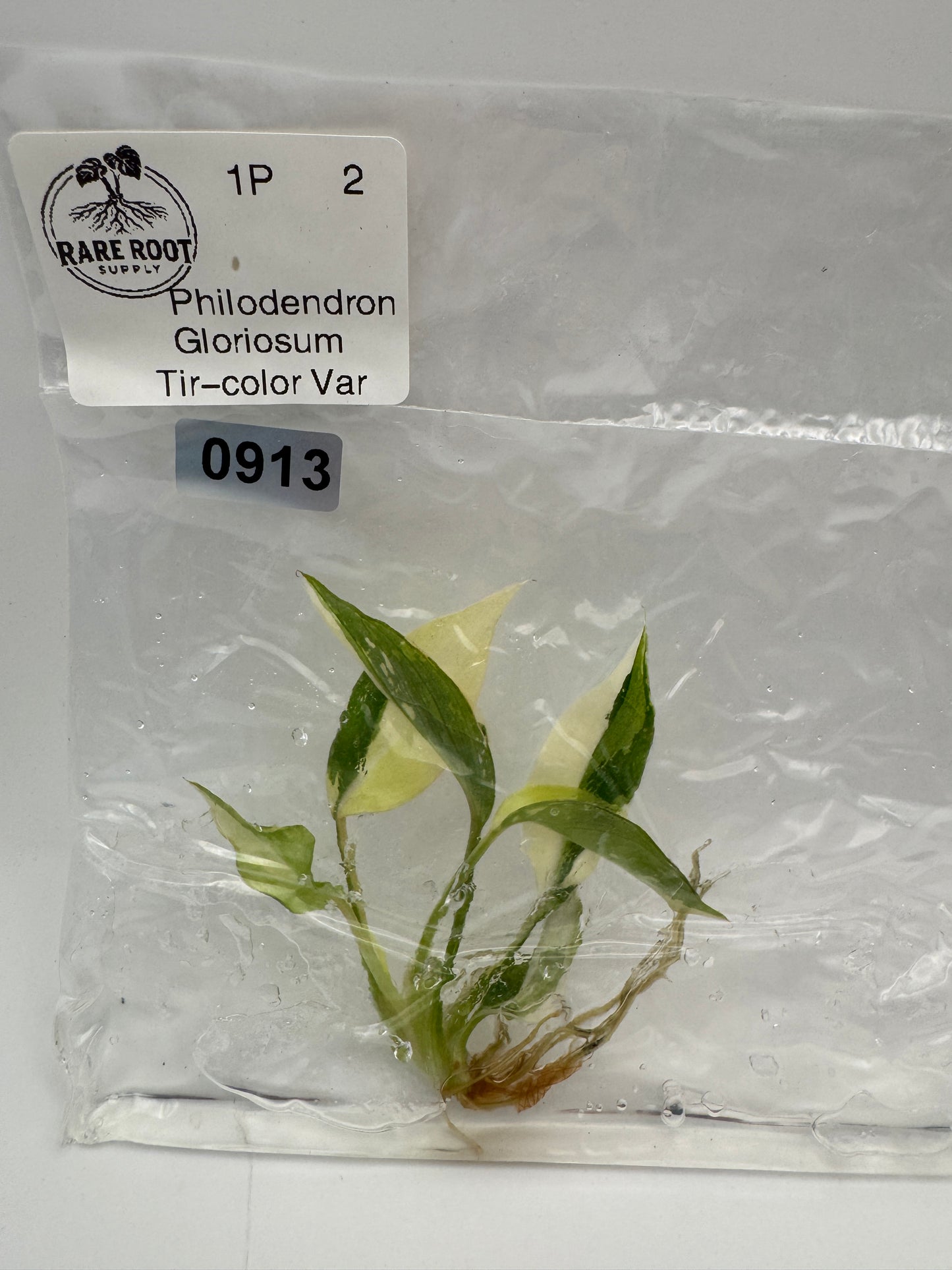
Philodendron Gloriosum Tri-Color Tissue Culture-Growers Choice
Philodendron Gloriosum Tri-Color Tissue Culture-Growers Choice
Regular price
$45.00 USD
Regular price
Sale price
$45.00 USD
Couldn't load pickup availability
🌿 Philodendron "Gloriosum Tri-Color"
🍃 Leaves
- Shape: Large, heart-shaped crawling leaves with a velvety surface and pronounced pale veins — unlike climbing philodendrons, this form grows horizontally along the substrate
- Variegation: Rare multi-color variegation expressed across a velvety dark base — deep green base with white (albo) sectoral patches appearing as crisp or marbled blocks, cream to pale yellow zones blending into green tissue (aurea expression), occasional pink blush or transitional tones in newer growth where pigments overlap; some leaves show a true "tri-zone" effect with green, white, and yellow present on a single blade
- Derived from Philodendron gloriosum, known for its crawling growth and velvety foliage — three-way variegation expression (albo + aurea + occasional pink blush) on a single velvety leaf form with extremely variable leaf-to-leaf outcomes and high contrast between soft velvety texture and sharp color blocks
- Texture: Velvety, matte surface with deeply etched pale veins — variegated sections may appear smoother or slightly less textured than green areas
🌱 Growth Habit
- Crawling aroid (not vining) — rhizome grows horizontally along the soil surface
- Produces one large leaf at a time from the creeping rhizome; leaves emerge sequentially along a horizontal growth path
- Slow but steady growth under stable conditions
- Mature plants develop increasingly larger leaves with more pronounced venation and velvet texture — highly variable variegation expression depending on node
🌡️ Care Guide
☀️ Light
- Bright, indirect light preferred
- Maintains strong contrast between green, white, and yellow sections and supports larger leaf development
- Too little light → loss of variegation clarity, slower crawling growth, and smaller leaves
💧 Water
- Keep soil lightly moist but well-draining — water when top layer begins to dry
- Use an airy, organic-rich aroid mix with consistent moisture without saturation
- Avoid overwatering (rhizome rot risk along crawling stem) and allowing soil to fully dry for extended periods
Share