1
/
of
2
Alocasia Longiloba Purple Tissue Culture-Growers Choice
Alocasia Longiloba Purple Tissue Culture-Growers Choice
Regular price
$45.00 USD
Regular price
Sale price
$45.00 USD
Couldn't load pickup availability
🌿 Alocasia "Longiloba Purple"
🍃 Leaves
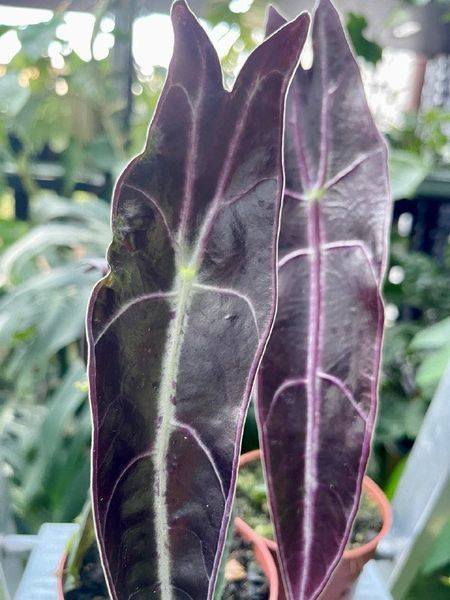
- Shape: Long, narrow arrowhead-shaped leaves with pronounced basal lobes and a sharply pointed tip — more elongated and elegant than broader Alocasia types
- Coloration: Deep green to dark purple-green upper surface with rich purple to burgundy undertones most visible on mature leaves or under bright light — leaf undersides often show stronger purple pigmentation; veins may appear slightly lighter or subtly highlighted depending on maturity
- Closely related to the long-leaf forms of Alocasia longiloba — strong purple-toned pigmentation layered over a sleek, elongated leaf form with more emphasis on color depth and silhouette than texture or variegation; dark, moody aesthetic with subtle color shifts depending on lighting
- Texture: Smooth, slightly glossy surface with firm structure — less "scaly" than Dragon Scale types, more refined and streamlined
🌱 Growth Habit
- Upright, rhizomatous Alocasia with a vertical growth form — moderate size, more elongated than compact ornamental types
- Produces leaves sequentially from a central rhizome; moderate growth rate in stable conditions
- Leaves increase in size and depth of color as the plant matures
- Mature plants develop longer, more dramatic leaf blades with deeper purple undertones and stronger contrast between upper and lower leaf surfaces
🌡️ Care Guide
☀️ Light
- Bright, indirect light preferred
- Enhances purple pigmentation and maintains strong leaf structure and color depth
- Too little light → greener, less purple expression, slower growth, and smaller leaves
💧 Water
- Keep soil lightly moist but well-draining — water when top layer begins to dry
- Use a chunky, airy aroid mix with consistent moisture without saturation
- Avoid overwatering (rhizome rot risk) and allowing soil to fully dry for extended periods
Share