1
/
of
1
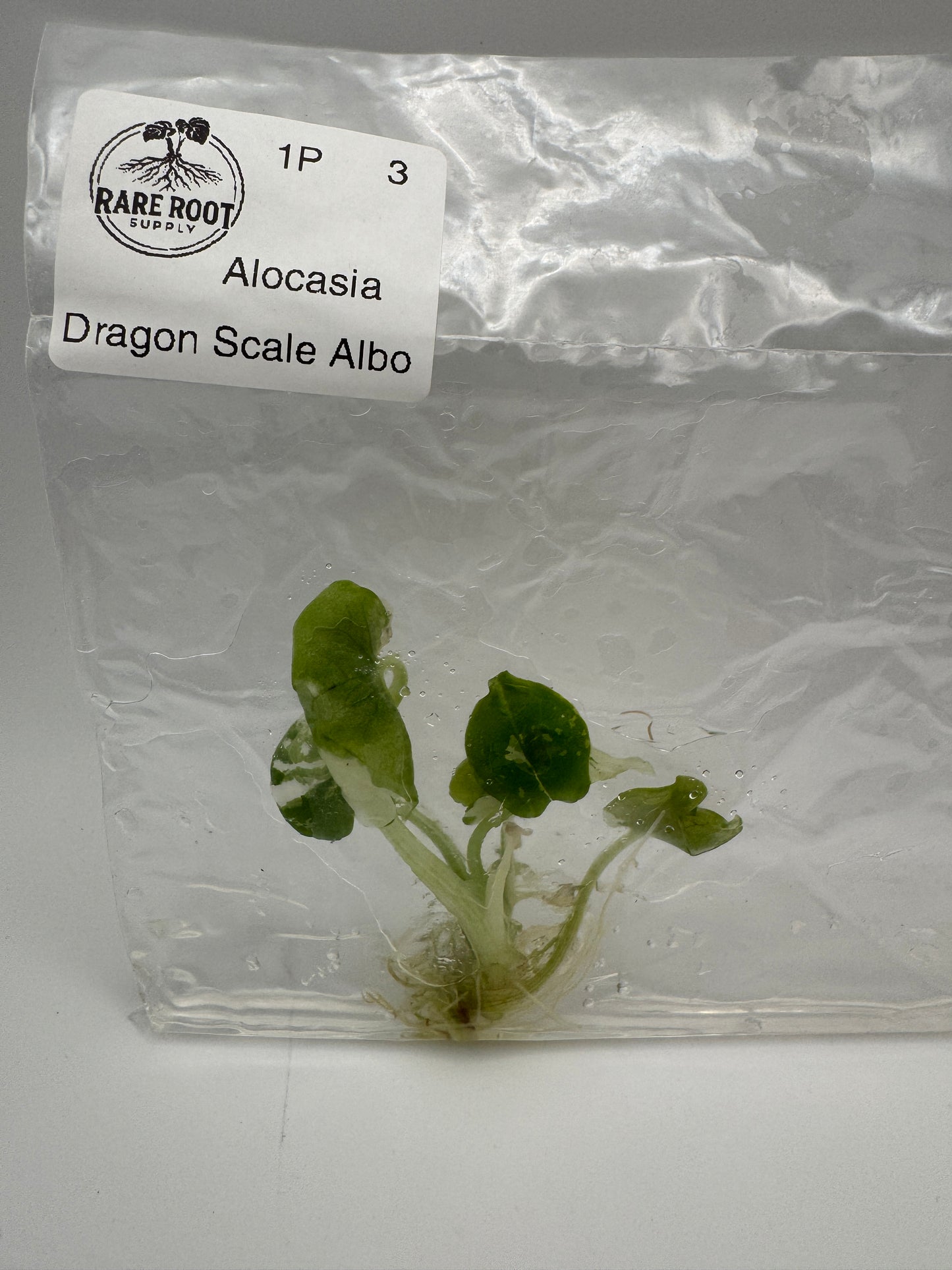
Alocasia Dragon Scale Albo Tissue Culture-Growers Choice
Alocasia Dragon Scale Albo Tissue Culture-Growers Choice
Regular price
$27.00 USD
Regular price
Sale price
$27.00 USD
Couldn't load pickup availability
🌿 Alocasia "Dragon Scale Albo"
🍃 Leaves
- Shape: Compact, shield-shaped leaves with a thick, slightly cupped form — distinctively rigid structure with pronounced, embossed venation resembling dragon scales
- Variegation: Crisp white sectoral patches cutting through dark green tissue — half-moon leaves or sharply divided white/green sections, occasional marbling or streaking that follows or interrupts the vein pattern; some leaves may emerge almost fully green or heavily white depending on the growth cycle
- Strongly derived from Alocasia baginda 'Dragon Scale' — extreme contrast between textured "dragon scale" foliage and pure white albo variegation; white sections are often sharply defined rather than softly blended, and each leaf can vary significantly in balance between green and white
- Texture: Thick, leathery leaves with a matte-to-satin finish — deeply raised venation creates a sculpted, armor-like surface
🌱 Growth Habit
- Slow-growing, compact rhizomatous Alocasia — maintains a tight, upright clumping form
- Produces leaves sequentially from a central rhizome; highly variable leaf outcomes (green, sectoral albo, or mostly white)
- Growth rate slows significantly with high variegation
- Mature plants develop larger leaves with more pronounced venation and stronger texture definition — "scale" effect becomes more dramatic, though variegation patterns increase in instability
🌡️ Care Guide
☀️ Light
- Bright, indirect light is essential
- Maintains variegation contrast and supports healthy growth in low-chlorophyll (white) areas
- Too little light → reversion to greener leaves, loss of scale definition, and reduced growth vigor
💧 Water
- Keep soil lightly moist but well-draining — water when top layer begins to dry
- Use a chunky, airy aroid mix with consistent moisture without saturation
- Avoid overwatering (high risk of rhizome rot) and allowing soil to fully dry for long periods
Share